
(re)construction
Experiments Using Mixtures of Earth and Straw to Hermetically Seal Underground Pits Intended for Grain Storage and Ensure Optimal Preservation
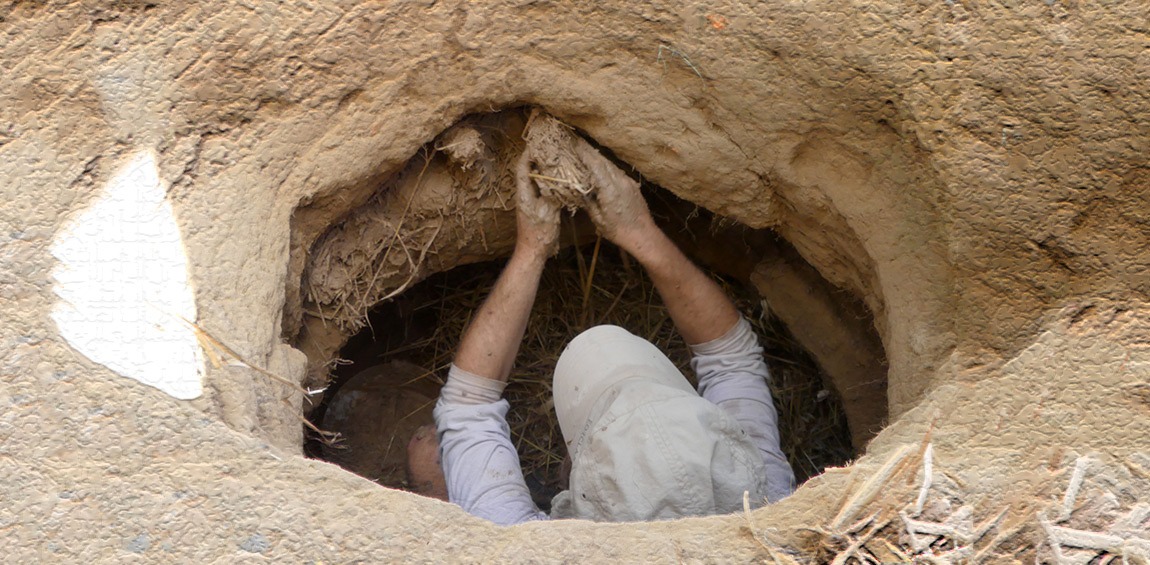
In regard to underground grain storage, archaeologists know only the shape and volume of storage pits and understand that air and watertightness is essential to protecting the reserves. It is therefore necessary to consider the plausible and effective methods for sealing such pits. The seals must be natural, readily available, and locally sourced. The grain reserves must be protected from external pests, such as insects and rodents. Given that grains are living organisms the internal environment of the pits must be capable of isolating the grain from external elements without hindering their natural development. The experiments on grain preservation in storage pits focussed primarily on using a mixture of soil and straw to seal them. The recipes and manufacturing processes have been gradually improved over ten years of experiments conducted by a multidisciplinary team.
The Neolithic Snowshoe from Gurgler Joch (Italy) - Reproduction and Usage
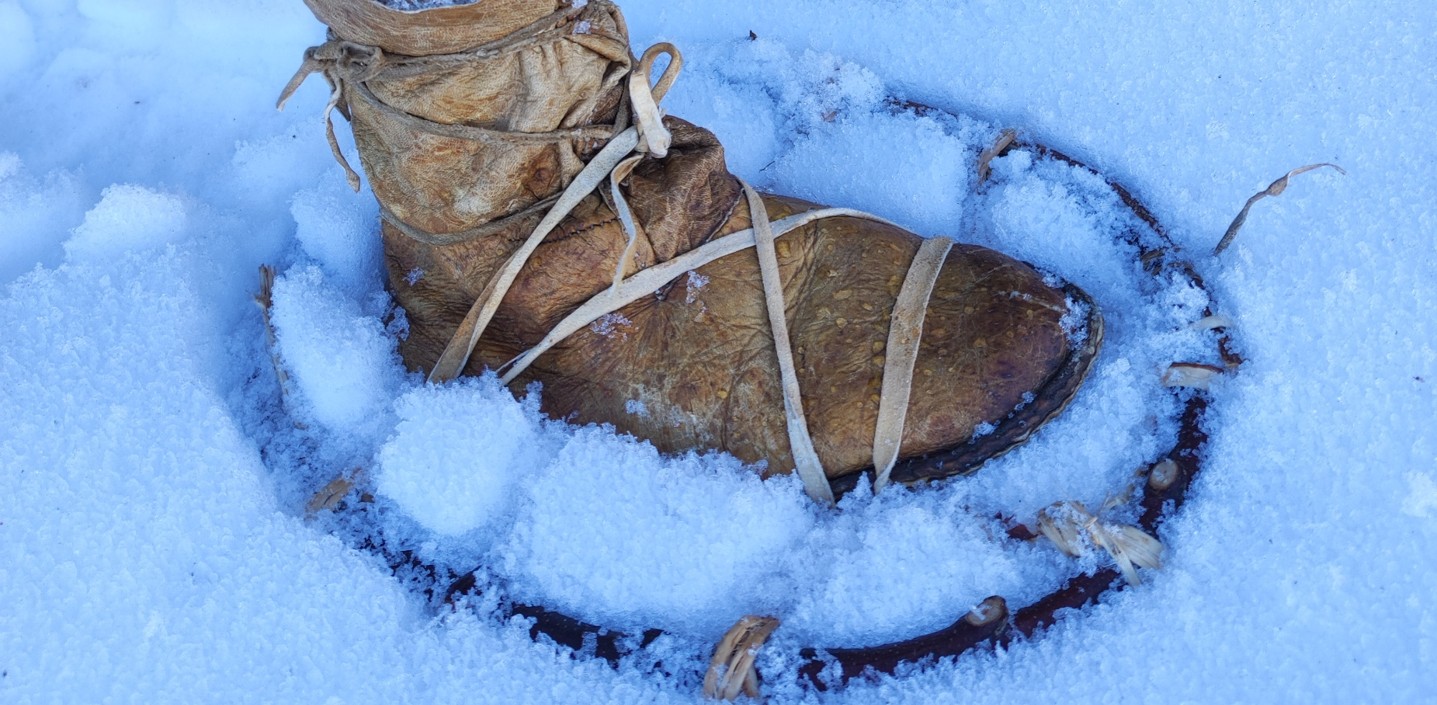
The Archaeological Museum of Southern Tyrol (Italy) houses an object identified as a snowshoe. This wooden artifact has been dated to the late Neolithic. It is made from bent and twisted birch (Betula) branches. Experimental reconstruction of the object sheds light on its mode of manufacture and the tools involved. Furthermore, experimental usage offers insights into its practicability and placement within the wider context of Neolithic material culture.
Certain Small Contrivances. Recreating an Intestinal Condom Recipe to Determine the Potential Effects of Manufacturing on Zooarchaeology by Mass Spectrometry (ZooMS)

Publication Date
Skin and membranous artifacts are rarely recovered from archaeological excavations due to taphonomic processes that result in rapid decomposition. These classes of artifacts can, however, occasionally be preserved in extreme conditions such as waterlogging, freezing, and dry environments. One such artifact is likely an intestinal condom recovered from a well at the Oxon Hill/Addison Plantation site (18PR175; ca. 1685-early 20th c.) in Maryland, United States...
Building Rome in a Couple Days: Erecting a Painted Portico in Alésia

Publication Date
Roman construction is a recurring theme in archaeology, having been studied through many lenses: architecture, materials, urbanism, ornamentation, economics, religion, and so forth. Nevertheless, many aspects of the building process have seldom been the focus of these analyses, especially the specific actions and craftsmen involved in the chaîne opératoire. It is the aim of the Fabri Tignuarii – the roman college of building craftsmen – to delve into the specifics of roman construction...
The Lefkandi-Toumba Building as a Timber-Framed Structure

Publication Date
The article demonstrates that the building or megaron on the Toumba hill at Lefkandi (Euboea), dating from c.950 BC, was a timber-framed structure, in contrast to the common view of it as a building with loadbearing walls. This raises the possibility that the walls, perhaps even parts of the frame and the roof, were still under construction...
All Aboard! A re-enactment approach to Victorian Railway Guard’s Clothing

Publication Date
This paper examines the form, function and practicality of the clothing worn by late nineteenth century railway guards in Britain. It does so by taking a re-enactment approach, involving the commissioning, wearing, and reporting of replica garments in an appropriate workplace. It demonstrates that whilst such uniforms were smart and created an impression of authority in the wearer and potential viewer...
Nesshenge: an Experimental Neolithic Henge with 15 Years of Exposure

Publication Date
Our understanding of the planning processes involved before any Neolithic structure was physically built, from the moment when it was conceived in a person’s mind up to the point of its construction requires further investigation for which experimental archaeology can provide some direction...
Hay is for Horses: Making and Using a Traditional-Style Irish Straw Harness

Publication Date
The lack of metal lorinery in the archaeological record of early medieval Ireland is addressed through a hypothesis that post-Iron Age bridles were made of straw and rushes, which did not survive deposition. Reconstruction and testing of a straw bridle show the material to be strong and quite suitable for vernacular use...
An Experimental Approach to Baking Ancient Roman Placenta

Publication Date
Cato The Elder (234-149 BC) wrote our oldest extant work of continuous Latin prose, On Farming (de agri cultura), a how-to guide for farming and life that also included many recipes. We were interested in the section on bread recipes in this text, particularly the recipe for the complex, layered placenta due to...
The Butser Ancient Farm Horton Neolithic Building – Its Construction and Significance to the Interpretation of Buildings of Early Neolithic Britain and Ireland

Publication Date
In 2019 a substantial building, based on archaeological evidence of early British Neolithic dwelllings, was constructed by site staff, volunteers, and staff of Wessex Archaeology at the Experimental Archaeology site, Butser Ancient Farm in Hampshire, England. The archaeological feature on which our building was based was excavated in 2012 by Wessex Archaeology as part of a pre-extraction programme...