
textile
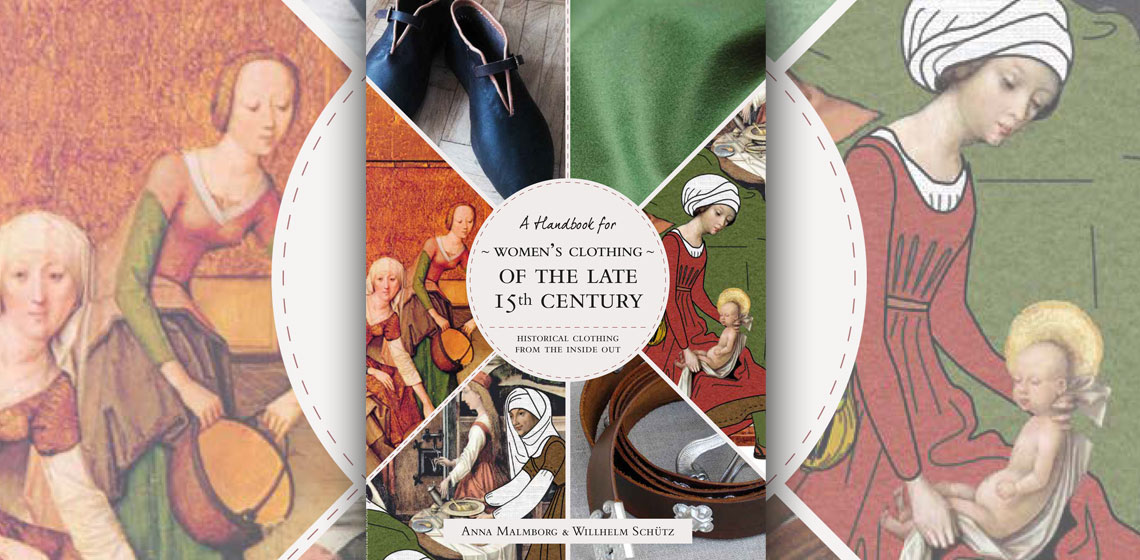
Book Review: A Handbook for Women's Clothing of the Late 15th Century by Anna Malmborg & Willhelm Schütz
Publication Date
Medieval re-enactment, especially late 15th century, has become increasingly popular during the past 15-20 years and it seems like the growth will not stop anytime soon (unless the Viking re-enactment takes over as a consequence of the popular culture and mainstream focus – but that is another discussion). The book is part of a series ''Historical Clothing From the Inside Out'' from different historical periods...
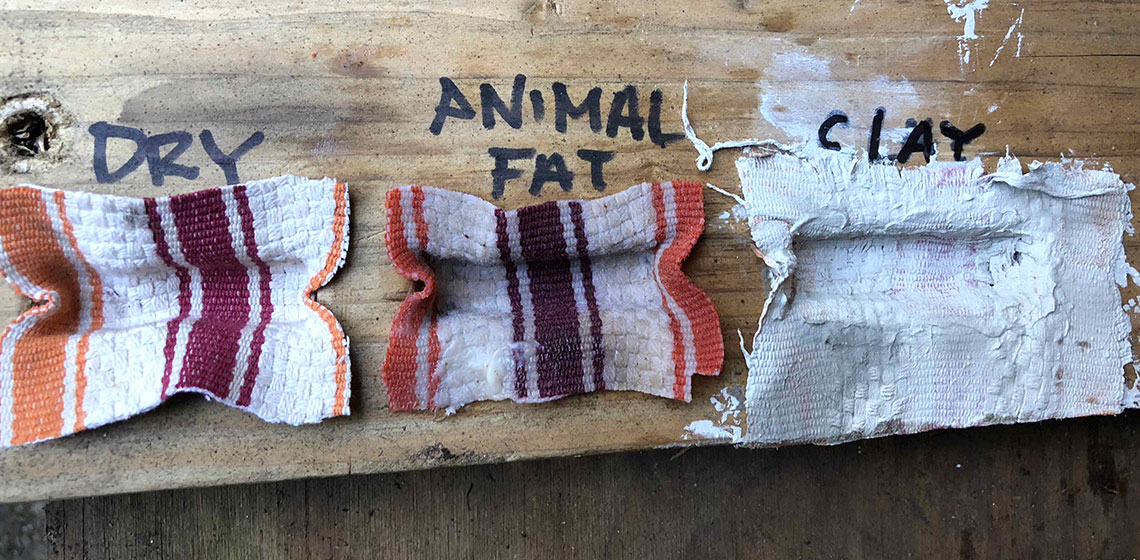
Textile Textured Silver Ingots: A Technical Investigation into how these Textures came to be on some Viking Hoard Ingots
Publication Date
The ‘West Coast Cumbria’ hoard, discovered in 2014, is a late ninth/ early tenth-century Viking silver hoard, housed at the Beacon Museum, Whitehaven, UK. It is composed of 20 Viking silver objects: bar-shaped ingots and ornaments, in various stages of fragmentation (PAS ‘Find-ID’ LANCUM-FA14C8). One, complete ingot (museum no. 2016.162.5) bears coarse cloth-impressions on its upper surface...
Prehistoric Dressing for Third Millennium Visitors. The Reconstruction of Clothing for an Exhibition in the Liptov Museum in Ruzomberok (Slovakia)

Publication Date
There can be various reasons for reconstructing clothing for museum purposes. The most frequent one, as in the case of this paper, is to improve and liven up an exhibition with 3D models (Hendszel et al., 2008), which present the fashion culture of individual periods, nationalities or specific regional features to the general public...
Some Uses of Experiment for Understanding Early Knitting and Erasmus' Bonnet
Publication Date
10th EAC Leiden 2017
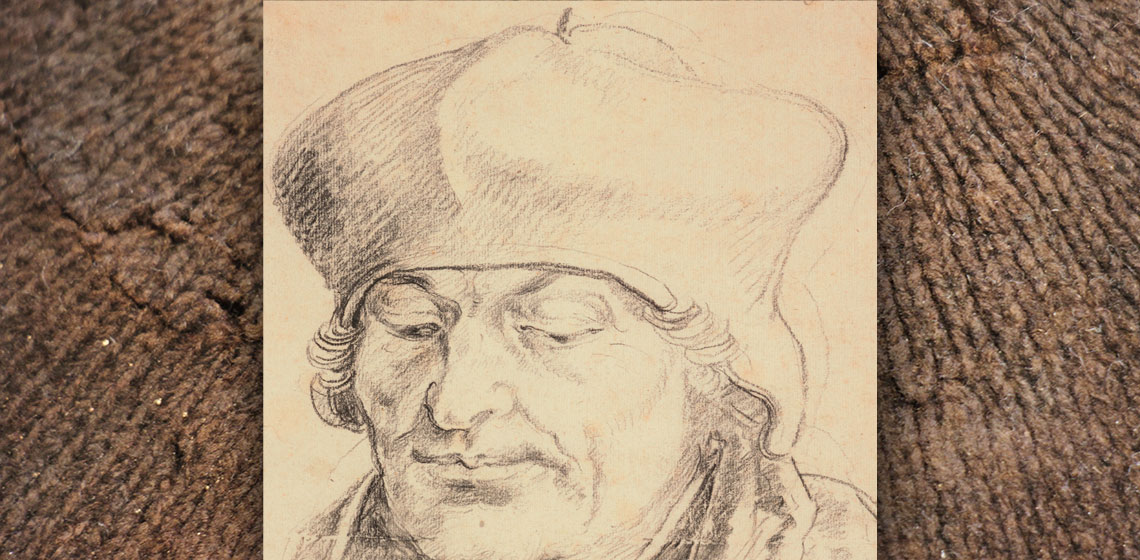
***Of Erasmus, prince of humanists (1466?-1536), no less than eight portraits from life survive – all eight in the exact same bonnet. A recently published investigation of this iconic garment (Kruseman, Sturtewagen and Malcolm-Davies, 2016) involved establishing a 250-year typology of the bonnet from iconographical sources, compiling technological and economic data from archival sources, and systematic experiments addressing numerous, various and fundamental questions, from yarn characteristics in archaeological knitted textiles to the use (or not) of hatter's forms in the finishing of bonnets.
***Of Erasmus, prince of humanists (1466?-1536), no less than eight portraits from life survive – all eight in the exact same bonnet. A recently published investigation of this iconic garment (Kruseman, Sturtewagen and Malcolm-Davies, 2016) involved establishing a 250-year typology of the bonnet from iconographical sources, compiling technological and economic data from archival sources, and systematic experiments addressing numerous, various and fundamental questions, from yarn characteristics in archaeological knitted textiles to the use (or not) of hatter's forms in the finishing of bonnets.
Understanding the Archaeological Record: Reconstructing a Warp-Weighted Loom
Publication Date
10th EAC Leiden 2017
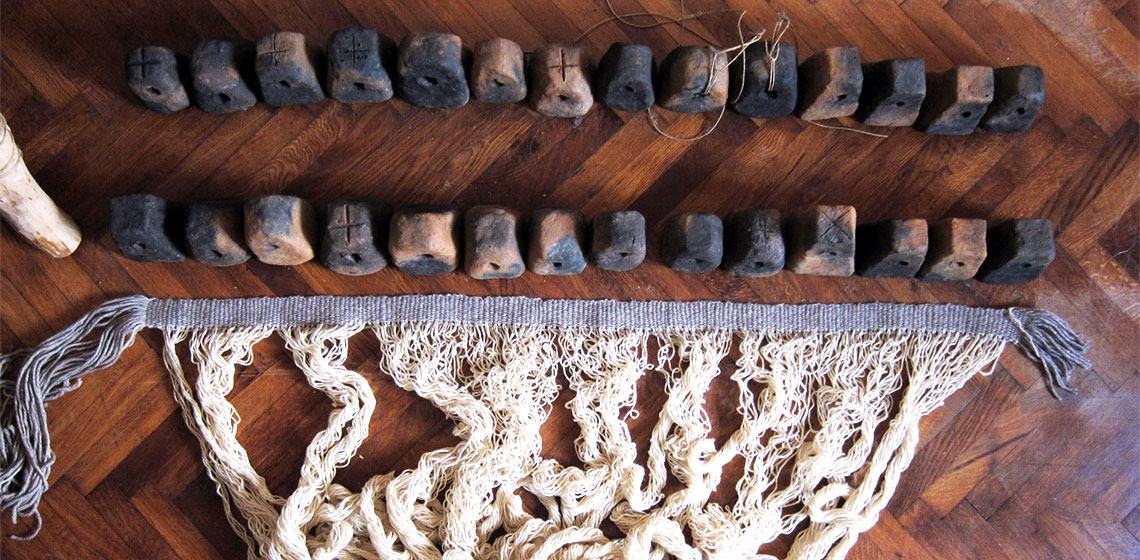
***The paper deals with a reconstruction of a warp-weighted loom based on a rare find of 36 in situ loom weights in an object interpreted as a weaving hut at an archaeological site Virje-Sušine in Northern Croatia dated in late Iron Age (La Tène C period, 2/2 3rd – 2/2 2nd century BC)...
***The paper deals with a reconstruction of a warp-weighted loom based on a rare find of 36 in situ loom weights in an object interpreted as a weaving hut at an archaeological site Virje-Sušine in Northern Croatia dated in late Iron Age (La Tène C period, 2/2 3rd – 2/2 2nd century BC)...
Conference Review: European Textile Forum 2017
Publication Date
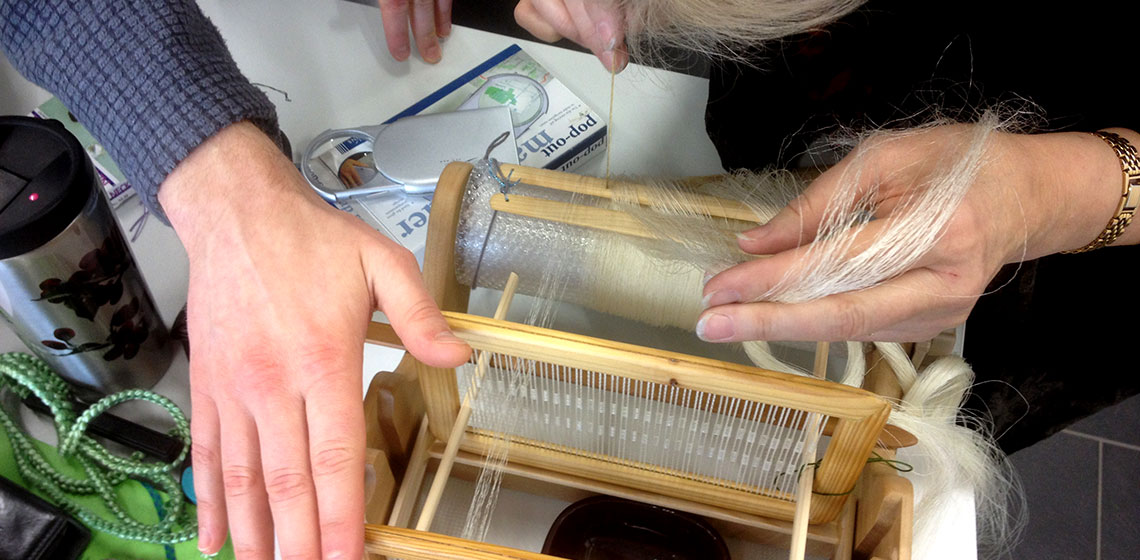
The eighth European Textile Forum took place 6-12th November 2017, organised by Katrin Kania and Sabine Ringenberg. It was held at its adopted home LEA (Labor für Expermentelle Archäologie) in Mayen, Germany, a satellite of the RGZM (Römisch-Germanisches Zentralmuseum) at Mainz, by invitation of LEA director Michael Herdick...
Book Review: Dressing Prehistory (Oblekani Praveku) by K. Urbanová and J. T. Pulpán
Publication Date
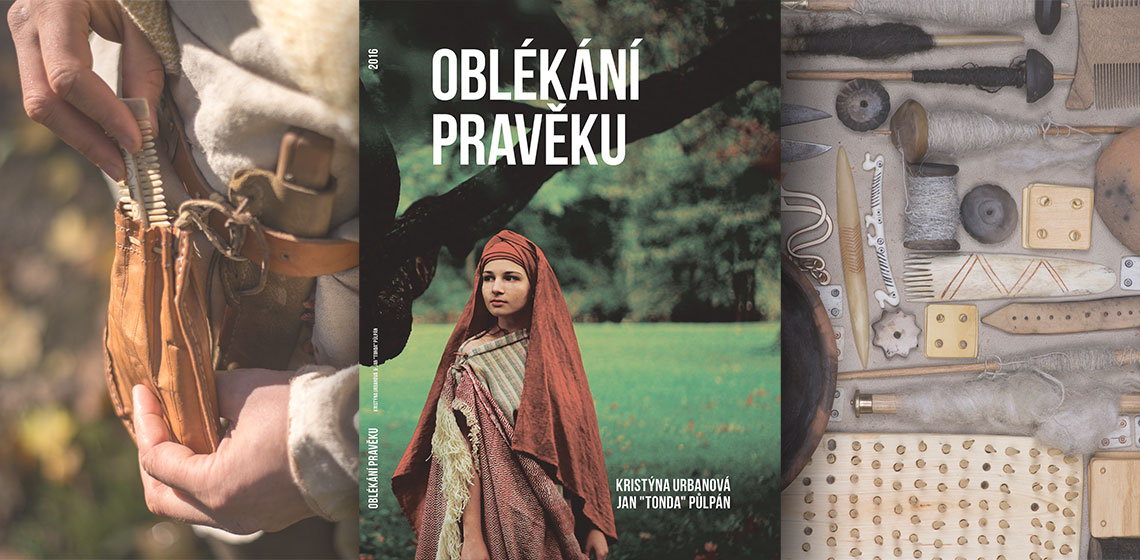
A unique popular education publication called Oblékání pravěku (Dressing prehistory) has appeared on the Czech book market. It is a work by archaeologist Kristýna Urbanová, and Jan T. Půlpán, an experienced experimenter. At first glance the book attracts attention with an unusually large format, well chosen because of the foundation elements of the publication – colour photographs...
Research, Experimentation and Outreach in the Early Neolithic Site of La Draga (Banyoles-Spain)
Publication Date
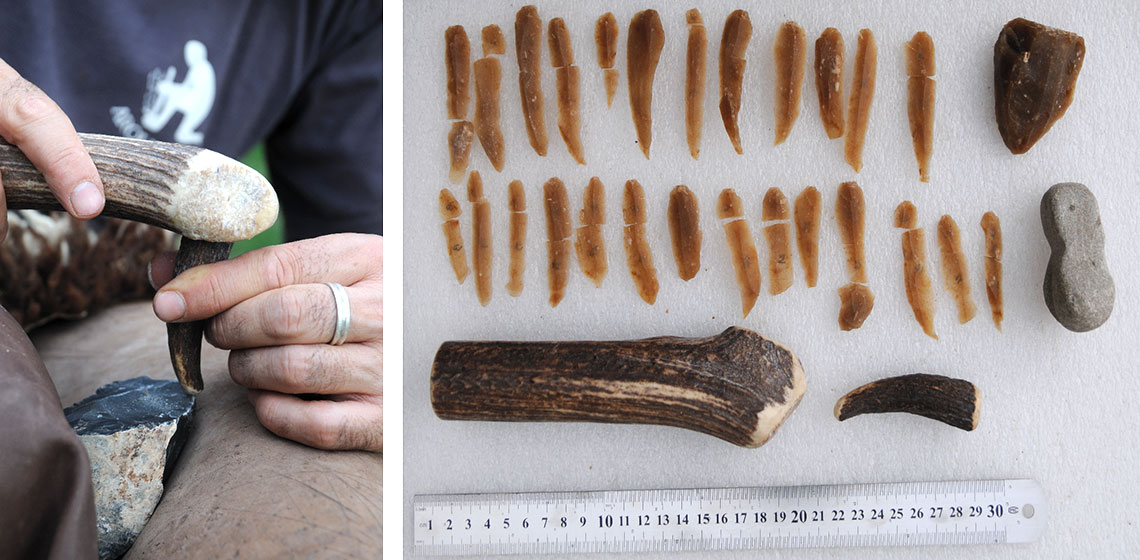
The exceptional preservation of organic material in the early Neolithic site of La Draga (Banyoles, north-east Iberian Peninsula) has allowed lines of research that had rarely been undertaken in the region. The research project carried out at the site of La Draga involves experimental archaeology as a...
Conference Review: European Textile Forum 2016

Publication Date
The annual European Textile Forum took place from 7-13 November 2016. This year the focus was ‘mistakes’, the unintended consequences in textile manufacture or preservation that reveal more about the artefact, the techniques used and its makers than a ‘perfect’ piece could do. The programme was rich in practical experiments..
Book Review: The Art of Prehistoric Textile Making: The Development of Craft Traditions and Clothing in Central Europe by Karina Grömer
Publication Date
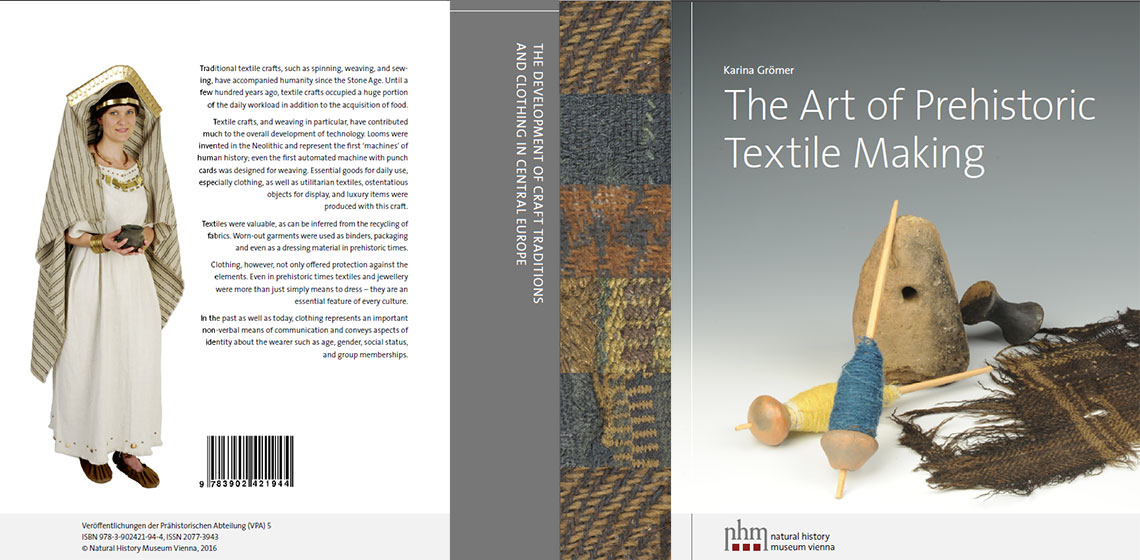
Textile research has made significant advances in recent years as new technologies and methods are developed, tested, and applied to the analyses of archaeological textiles. The FWF-Project1, a collaborative research effort involving researchers and artists from institutions in Austria, the Netherlands, and Germany, engaged in ...